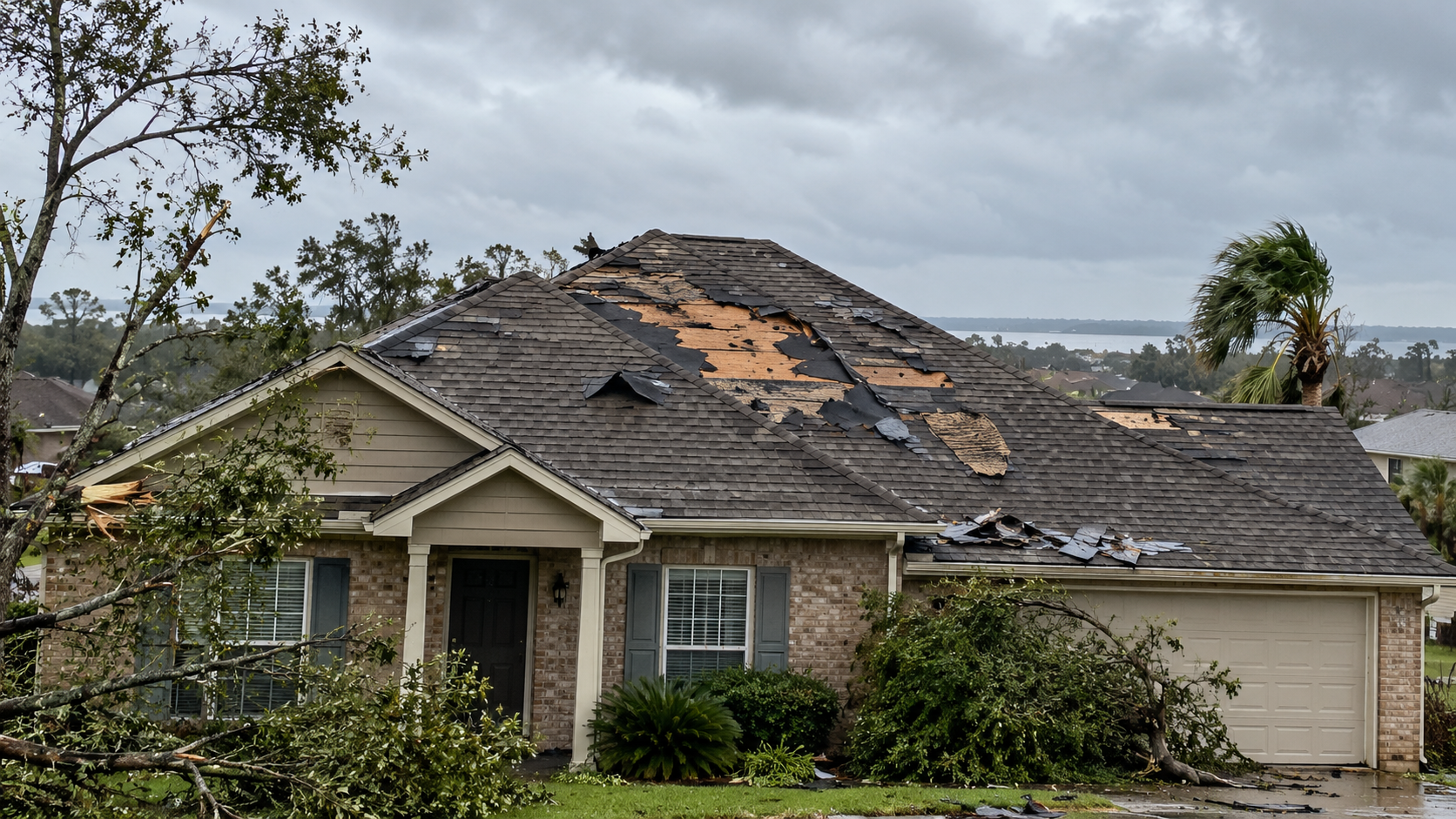
It's been a little over two weeks since Hurricane Isaias came through Northwest Florida, and plenty of Pensacola homeowners are still trying to get things back in order.
Some have already started repairs. Others are waiting on insurance adjusters, dealing with fallen trees, or trying to figure out whether their roof needs a few repairs or a complete replacement.
And then there are the houses that look perfectly fine from the road. No missing shingles, no obvious leaks, nothing that immediately stands out. After the wind we experienced on October 9, though, it's understandable to have some questions about what's going on overhead.
We've put together this guide for anyone dealing with roof damage after Isaias, including homeowners who aren't quite sure whether they have damage at all.
We'll cover what to look for, how insurance claims work in Florida, when repairs make sense, and what you should know before hiring someone to work on your home.
We'll also explain something that often gets overlooked after a hurricane: the difference between damage to the roofing materials and damage to the structure holding everything up.
At MISTI Roofing, we handle both roofing and construction projects throughout Pensacola and Northwest Florida. We've seen how important it is to get the full picture before jumping into repairs.
What Happened During Hurricane Isaias?
Hurricane Isaias made landfall near Destin on October 9, 2026, as a Category 2 hurricane with sustained winds of 105 mph.
Pensacola wasn't directly in the center of the storm, but that didn't keep our area from seeing some extremely strong winds. The National Hurricane Center reported a 100 mph gust near Pensacola and another reaching 116 mph near Santa Rosa Sound.
To put that into perspective, those winds were strong enough to tear roofing materials loose, bring down large trees, and cause damage to homes that had been standing for decades.
And that's exactly what happened throughout our area.
By October 16, the City of Pensacola had already received reports of more than $71 million in damage to personal property. That figure didn't even account for everything, as damage assessments were still underway.
For local homeowners, those numbers mean something much more personal. They're dealing with damaged bedrooms, wet ceilings, missing shingles, fallen trees, and unexpected repair bills.
It's also worth pointing out that not all hurricane damage becomes obvious right away. A loose shingle might stay in place until another storm rolls through. Water might be getting into an attic without ever reaching the ceiling below.
With the kind of wind Isaias brought to the Pensacola area, even homeowners who escaped the worst of the storm have good reason to take a closer look at their roofs.
1. Your Roof Was Damaged. What Should You Do First?
If you've found shingles in your yard or noticed water coming through your ceiling, there's a good chance you've already started thinking about repair costs.
That's understandable. But before getting into estimates and insurance, make sure the house is safe.
A roof that's missing a few shingles is one thing. A roof with a large tree resting on it is another.
If you notice sagging, a partially collapsed section, cracked supports, or anything that makes you question the stability of your home, don't enter that area. Leave large branches and damaged sections alone until someone qualified can assess them.
Be especially careful around downed power lines. Stay away from them and contact your utility provider. Call 911 if there's an immediate danger.
For damage that doesn't pose an immediate safety risk, start documenting what happened.
Use your phone to photograph the damaged areas, including anything you've noticed inside the house. It helps to take a few wider pictures showing the entire roof or room, followed by closer pictures of the damage.
If water is coming inside, move anything valuable out of its path as long as it's safe. You'll also want to contact your insurance company and find out what they need from you.
Keep receipts for anything you spend on emergency repairs, temporary protection, or cleanup.
One thing we'd caution against is rushing into a major repair agreement before you understand the damage.
After a hurricane, roofing companies are busy, materials may be harder to get, and everyone wants their home fixed as soon as possible. You may already have neighbors getting new roofs installed.
That doesn't mean you need to sign with the first contractor who offers to start tomorrow.
Unless there's an immediate safety issue, give yourself enough time to understand what your home actually needs.
2. How to Check for Roof Damage From the Ground
You can learn quite a bit about your roof without ever getting on it.
In fact, after a hurricane, staying on the ground is the safest place to be.
Shingles may have loosened, parts of the roof could be unstable, and surfaces that were safe to walk on before the storm might not be safe anymore.
Once your property is clear of dangerous debris and power lines, walk around the house and take a look.
Start with the shingles
Missing shingles are usually easy to spot, especially when they leave a patch of exposed material behind.
But wind damage doesn't always look that dramatic.
Sometimes a shingle lifts during the storm and settles back down afterward. It might still be attached, but the seal underneath could be broken. That makes it easier for wind to lift it again later.
You might notice shingles that look uneven, crooked, curled, or different from the surrounding ones.
Also check the yard and landscaping. Roofing pieces scattered around the property are a good reason to have the roof inspected.
Look around vents, chimneys, and roof joints
These areas often have metal flashing, which helps direct water away from openings and seams.
When flashing bends, pulls loose, or disappears during high winds, it can leave gaps where rain can enter.
Depending on your roof's shape, some of these areas may be difficult to see from the ground. Don't worry about trying to inspect every inch yourself.
Check the gutters and roof edges
Gutters hanging away from the house, bent metal, and damaged roof edges can all point to wind damage.
Roof edges deserve attention because wind can get underneath loose materials and pull them back. What starts along the edge can affect a larger section of roofing.
Pay attention to fallen branches
A branch doesn't necessarily have to punch through your roof to leave damage behind.
Large limbs can hit the roof hard enough to crack materials underneath. Smaller branches can scrape or loosen shingles as they're blown across the surface.
If a tree fell onto your house, have the affected area professionally assessed before attempting to remove it.
Don't forget to look inside
Check ceilings and walls for stains, damp spots, peeling paint, or anything that wasn't there before October 9.
Pay attention to areas around ceiling lights and vents, too.
If you can safely access your attic, look for damp wood, wet insulation, or signs of water entering around roof openings.
Stay out of any attic that appears unsafe, and don't touch wet electrical fixtures or wiring.
Even if you don't find anything, keep an eye on things during the next few rounds of rain. Some leaks take time to show up.
3. Why a Roof Can Look Fine but Still Have Hurricane Damage
This is one of the trickier parts of storm recovery.
A homeowner walks outside, checks the roof from the driveway, and doesn't see anything unusual. Naturally, they assume they got lucky.
And they might have.
But the condition of a roof isn't always something you can judge from the street.
Consider what happens when strong wind gets underneath a shingle. The shingle may lift, lose its seal, and then fall right back into place. Unless someone gets a closer look, there's a chance nobody notices.
The next time we have strong winds, that same shingle may be more likely to come loose.
Water creates another problem.
Rain doesn't always enter a roof and drip straight down. It can travel along wood, roofing materials, or framing before reaching a spot where it finally becomes visible.
A stain near your living room ceiling could be coming from a completely different part of the roof.
There's also the decking underneath the roofing materials. This wood supports the roof system, but it's hidden from view. If a fallen tree or other debris damaged it, replacing the shingles alone may leave the underlying problem untouched.
None of this means every home in Pensacola needs a new roof after Isaias.
It simply means that appearances don't tell you everything.
If you experienced strong winds, found roofing materials in your yard, or have concerns about a particular area, getting an inspection is a reasonable next step.
4. What to Do if Your Roof Is Leaking
A roof leak is something you'll want to address sooner rather than later, particularly with the amount of rain we can get along the Gulf Coast.
Start with what's happening inside.
Move furniture, rugs, electronics, and other belongings away from the affected area if you can do so safely. Put a bucket or another container under dripping water, and photograph the damage for your records.
If water is collecting around a light fixture, outlet, or electrical equipment, don't touch it. Keep clear and contact a qualified professional.
You'll also need to stop more rain from getting inside until permanent repairs can be made.
Should you put a tarp on the roof?
A roof tarp can provide temporary protection when shingles or other roofing materials have been damaged.
The key word is temporary.
A tarp can help keep water out, but it doesn't repair the roof or address damage underneath. It's meant to protect the house while a permanent solution is arranged.
We'd also strongly discourage homeowners from climbing onto a storm-damaged roof to install one.
Wet shingles, loose materials, hidden soft spots, and steep roof slopes make this dangerous work. Have a qualified professional determine the safest way to cover the affected area.
Once the leak is stopped, check for water damage inside the house.
Wet insulation and drywall don't necessarily dry out just because the rain stopped. Depending on how much water entered, those materials may need to be removed or dried by a professional.
A small roof leak can turn into a much more expensive repair when moisture is allowed to sit for weeks.
5. Roof Repair or Replacement: How Do You Know Which You Need?
If you've started talking with roofing companies, there's a chance you've already heard different opinions about your roof.
One contractor might recommend replacing a damaged section. Another might suggest replacing everything.
That can leave homeowners wondering whether they're getting good advice or being sold work they don't need.
The truth is that both repairs and replacements have their place.
When repairs may be enough
Say your roof is relatively new, was in good condition before the hurricane, and has a small area of damaged shingles.
In that situation, replacing the affected materials may be all that's needed, assuming the surrounding roof and underlying materials are sound.
The same could be true for certain flashing repairs or other isolated problems.
Of course, the damaged section needs to be inspected carefully. A repair won't accomplish much if nearby shingles were also loosened during the storm.
When a replacement makes more sense
Now consider a roof with damage spread across several sections.
Maybe large amounts of roofing material were lost, the decking underneath was damaged, or the existing roof was already nearing the end of its useful life.
At some point, trying to patch multiple problem areas may cost more over time than replacing the roof.
Certain types of damage and current building code requirements may also affect what can be repaired.
We also encourage homeowners to think about the age and condition of their roofing materials before the hurricane.
A 20-year-old roof that's already showing wear is a different situation from a roof installed just a few years ago.
But don't let anyone tell you that the age of your roof automatically means you need a replacement. The recommendation should come from its actual condition.
Before agreeing to a new roof, ask the contractor to show you what was damaged and explain why a repair would or wouldn't be enough.
You should be able to understand where your money is going.
6. Sometimes the Damage Goes Deeper Than the Roof
One of the biggest concerns after a hurricane is damage that goes beyond the roofing materials.
And with the number of trees and large limbs that came down throughout Pensacola during Isaias, this is something homeowners should pay close attention to.
Imagine a tree falling onto one side of your home.
From outside, you can see broken shingles and a large damaged area. But the impact may have also affected the roof decking, rafters, trusses, or other structural parts holding everything together.
Those issues aren't solved by installing new roofing materials.
The same is true if part of the roof is sagging or appears to have shifted after the storm. Something underneath may need to be repaired before the roof itself can be restored.
Roofing and structural repairs aren't necessarily the same job
In Florida, different types of contracting work can require different licenses.
Roofing contractors specialize in installing, replacing, and repairing roof systems.
Work involving major structural components, including damaged framing and load-bearing supports, may require a contractor with different licensing, additional permits, or engineering involvement.
A roofing license by itself doesn't give a contractor permission to perform every kind of structural repair.
Likewise, contractors performing general construction work need the proper authority for any regulated roofing work they take on.
This becomes especially important when a hurricane causes several types of damage to the same home.
How MISTI can help with both
At MISTI Construction & Roofing, we're licensed for both construction and roofing work.
That gives us the ability to help homeowners whose damage involves more than shingles, flashing, or other roofing materials.
For example, if a fallen tree damaged the roof and the framing underneath, we can assess the scope of work and help determine what repairs are needed, including any additional engineering or permit requirements.
Having both roofing and construction experience is valuable on projects where one part of the repair affects another.
We'd much rather identify a problem early than have a homeowner pay for roofing work only to find out later that something underneath still needs attention.
7. Filing a Roof Insurance Claim After Hurricane Isaias
For many homeowners, the insurance side of hurricane recovery is almost as stressful as the damage itself.
You may be dealing with a deductible that's higher than expected, waiting on an adjuster, or trying to understand what your policy covers.
There's also a lot of advice going around after a storm, and not all of it applies to every homeowner.
Your actual insurance policy matters more than what a neighbor received for their roof.
Start with your deductible
Florida homeowners often have a separate deductible for hurricane damage.
Unlike a standard deductible, a hurricane deductible may be calculated as a percentage of the insured value of your home.
For example, a house insured for $300,000 with a 2% hurricane deductible would have a $6,000 deductible.
That's a significant amount of money, especially when families are already dealing with cleanup and other storm expenses.
Check your policy to find out how yours is calculated, along with any coverage limits or exclusions.
Take pictures before making permanent repairs
Your insurance company will need information about the damage.
Photos are helpful, particularly when they show the condition of the home before cleanup or repairs began.
If you have older photos of your home showing what the roof looked like before Isaias, save those as well.
You'll also want to hold onto receipts for emergency services, temporary repairs, and other expenses related to the damage.
Don't delay reasonable steps needed to protect the home from further damage, but document what happened whenever it's safe to do so.
Contact your insurance company
Let your insurer know about any damage you believe was caused by the storm.
You don't need to have a final repair estimate before making that call.
Ask about the claims process and write down your claim number. Save any documents they send you, including the adjuster's findings.
A contractor's roof inspection can also be useful.
If a roofing company identifies damaged materials, ask for photos and a written explanation of what they found. That gives you something specific to discuss with your insurer.
If additional damage is discovered after roofing materials are removed, make sure it's documented and reported to your insurance company as required.
How long do you have to file a claim?
Florida law generally allows one year from the date of loss to report an initial property insurance claim and 18 months for a supplemental claim.
For hurricane-related damage, the law uses the date the hurricane made landfall or the applicable verified weather event.
These are general legal deadlines, and your policy may have additional requirements for giving prompt notice.
The best approach is to report known damage as soon as you reasonably can rather than waiting.
For more information about hurricane deductibles, claims, and your rights as a policyholder, visit the Florida Department of Financial Services.
8. Choosing a Roofing Contractor in Pensacola After Isaias
It doesn't take long after a major hurricane for roofing trucks and yard signs to start appearing all over town.
Some of those companies have been serving Pensacola for years. Others come from different parts of Florida or out of state to help with storm recovery.
Coming from outside the area doesn't automatically make a contractor untrustworthy. There are plenty of qualified companies that travel to help after disasters.
The important thing is knowing who you're hiring, what they're qualified to do, and whether they'll stand behind their work.
Verify the license
Always check a contractor's license before signing an agreement.
You can search Florida contractor licenses through the Department of Business and Professional Regulation.
Make sure the license is active and appropriate for the work being proposed.
This is especially important if your home needs structural repairs along with roofing work.
Ask for proof of insurance
A contractor should be able to provide information about liability insurance and workers' compensation coverage or an applicable exemption.
Don't assume someone has proper coverage because they have a professional-looking website or a nice truck.
Read the estimate carefully
A written estimate should give you a reasonable understanding of what's being done and what it will cost.
Pay attention to the materials being used, the areas included in the repair, cleanup, payment terms, and how unexpected problems will be handled.
Sometimes two estimates have very different prices because they're proposing different amounts of work.
A lower price isn't necessarily a better deal if important parts of the project have been left out.
Watch out for pressure
You may hear someone say they can only offer a certain price if you sign right away.
Or that your insurance company is guaranteed to pay for a completely new roof.
Be cautious with statements like those.
Nobody should be promising a particular insurance outcome without knowing the details of your policy and claim.
And be especially careful with any contractor offering to improperly waive, hide, or absorb your insurance deductible through an inflated claim.
Find out who will actually work on your home
It's reasonable to ask whether the contractor uses its own crews, subcontractors, or a combination of both.
You should also know who is responsible for managing the project and who you can contact with questions.
A contractor who's confident in their work shouldn't have a problem answering those questions.
For more information, we've also written Before You Hire a Contractor After Hurricane Isaias, Ask These Questions, which covers several things worth discussing before starting storm repairs.
9. Mistakes That Can Make Hurricane Recovery More Expensive
One of the hardest things about recovering from a hurricane is how many decisions have to be made at once.
You're trying to clean up your property, get back into a normal routine, communicate with insurance, and figure out which repairs need attention first.
It's easy to overlook something.
One of the most common mistakes is waiting too long to deal with a roof leak.
Maybe you only noticed a small stain in the corner of a bedroom. It doesn't seem like a big deal, and you have other things going on.
But water may still be entering the attic every time it rains. By the time the stain spreads, the insulation or wood above it could already have significant damage.
Another mistake is assuming that a roof without visible missing shingles is undamaged. As we mentioned earlier, wind can loosen roofing materials without tearing them completely off.
We'd also encourage homeowners to be careful about choosing contractors based entirely on price or availability.
After a major storm, it's tempting to hire whoever can get there first. Just make sure you've checked their qualifications and understand the agreement.
Avoid paying the entire cost of a major project upfront, and make sure the contract explains how payments will work.
Finally, don't overlook the possibility of structural damage.
If your home took a direct hit from a falling tree or has visible changes to its framing or roofline, have those concerns evaluated before the roof is covered with new materials.
10. What Happens During a Roof Repair or Replacement?
The amount of work involved will depend on what happened to your roof.
A small repair might involve replacing damaged shingles, fixing flashing, or addressing an isolated leak.
Other homes may need much more extensive work.
For a full roof replacement, the contractor will typically remove the old roofing materials and inspect the roof decking underneath.
Damaged sections of wood may need to be replaced before new underlayment and roofing materials can be installed.
There may also be permits and inspections required by the local building department.
If structural damage is involved, that work will need to be addressed in the proper order. In some cases, an engineer may need to evaluate the damage or provide repair plans.
One thing that can surprise homeowners is what gets discovered after the old roof comes off.
Some problems simply aren't visible until the roofing materials are removed.
That's why it's worth discussing how unexpected repairs will be priced and approved before the project begins.
We recommend asking your contractor about cleanup, material disposal, warranties, property protection, permits, and who will be overseeing the job.
It's also helpful to know what the plan is if rain moves into the area while the work is underway.
With our weather in Northwest Florida, that's a conversation worth having.
11. Is This a Good Time to Make Your Roof More Hurricane-Resistant?
Nobody wants to replace a roof because of hurricane damage.
But if you already need major roofing work, there may be opportunities to improve how your home handles future storms.
That's worth thinking about here in Pensacola.
We've seen how quickly a quiet hurricane season can change, and even storms that don't make a direct hit can bring damaging wind and rain.
Depending on your home's age, roof design, and the work being done, ask your contractor about stronger underlayment, proper flashing, wind-rated roofing materials, and improvements to the way the roof is attached to the structure.
A secondary water barrier may also be worth discussing during a replacement.
That added protection can help reduce water intrusion if the outer roofing materials are damaged during a storm.
For certain projects, stronger connections between the roof and the walls may also be an option, although the feasibility depends on the home's construction and the scope of work.
Florida's building codes have specific requirements for roofing work, so your contractor should explain what applies to your house and whether any upgrades go beyond those requirements.
There's no such thing as a roof that can withstand every possible hurricane.
Still, if you're already investing in a replacement, it makes sense to ask what improvements could help protect that investment for years to come.
12. Hurricane Isaias Recovery Resources for Pensacola Homeowners
Roof repairs are only one part of the recovery process. Some families are dealing with trees across their properties, damaged belongings, flooding, and other problems that may take months to work through.
A few local and state resources are worth keeping handy.
Escambia County damage reporting
Escambia County has provided a Citizen Damage Report system for homeowners and businesses affected by Isaias.
You can find more information at myescambia.com.
This reporting helps local officials document storm damage and support requests for disaster assistance.
It isn't the same as filing an insurance claim or applying directly for FEMA assistance.
Storm cleanup and volunteer help
Volunteer disaster relief organizations may be able to assist eligible residents with debris removal, fallen trees, and temporary roof protection.
The Crisis Cleanup Hotline can be reached at 1-800-451-1954.
Services depend on available volunteers and the work that needs to be done.
Florida disaster recovery information
The Florida Division of Emergency Management shares storm updates and recovery information through floridadisaster.org.
You can also call 211 to ask about community assistance and available services.
Insurance questions
The Florida Department of Financial Services has resources explaining homeowners insurance, hurricane claims, and consumer protections.
If something about your claim doesn't seem right or you don't understand the insurance company's decision, their consumer resources are a good place to start.
City of Pensacola updates
The City of Pensacola continues to share information about debris collection and local hurricane recovery.
Check cityofpensacola.com for updated instructions.
When placing storm debris at the curb, follow the city's current guidance on separating yard debris from construction materials and other waste.
Recovery services and assistance programs can change, so it's worth checking these sources for updated information rather than relying on something shared immediately after the storm.
13. Frequently Asked Questions About Hurricane Isaias Roof Damage
How can I tell if Hurricane Isaias damaged my roof?
Missing shingles, bent flashing, damaged gutters, fallen branches, and new ceiling stains are all things to watch for. Wind can also loosen roofing materials without removing them, which means not every problem is visible from the ground.
Should I get a roof inspection if nothing is leaking?
If your area experienced strong winds or you found roofing debris around your property, an inspection is worth considering. A roof can sustain wind damage without developing an immediate leak.
Will insurance cover a new roof after Isaias?
Possibly, but it depends on the damage and your specific insurance policy. Your deductible, coverage terms, and the insurance company's findings all play a role. A hurricane coming through doesn't automatically mean every homeowner qualifies for a new roof.
How long do I have to file a hurricane claim in Florida?
Florida generally requires notice of an initial property insurance claim within one year of the date of loss. Supplemental claims generally have an 18-month deadline. Report damage promptly and review your policy's requirements.
Should I call a roofer or my insurance company first?
You can contact both. Let your insurer know about suspected damage and arrange for a qualified roofing contractor to inspect your roof. If the damage creates an immediate danger, address safety and temporary protection first.
Can I repair a few damaged shingles instead of replacing my roof?
In many cases, yes. The decision depends on the extent of damage, the roof's condition, and any applicable building code requirements. An inspection should help determine whether a limited repair is appropriate.
What if a tree damaged the wood underneath my roof?
Damage to roof framing or other structural components may require construction repairs in addition to roofing. Make sure the contractor is properly qualified for both types of work and that any needed permits or engineering plans are obtained.
What if I didn't notice the damage until weeks after the hurricane?
Document what you've found and contact your insurance company promptly. Some roof damage doesn't become noticeable until later rainfall exposes the problem.
Do I need a permit to replace my roof in Pensacola?
A roof replacement generally requires a permit. Requirements for minor repairs may be different depending on the location and scope of work. Your contractor should verify the requirements with the appropriate building department.
How can I avoid roofing scams?
Check licensing, insurance, references, and written estimates. Be careful with high-pressure sales tactics or anyone promising to manipulate an insurance claim to cover your deductible.
How quickly should roof damage be repaired?
Active leaks, exposed roofing materials, and structural safety concerns should be addressed as quickly as reasonably possible. Other repairs can be scheduled based on the damage and your contractor's recommendations, but avoid allowing known problems to get worse.
14. Need Help With Roof Damage After Hurricane Isaias? We're Here in Pensacola.
For a lot of families, the last couple of weeks have been exhausting.
Even if your home didn't suffer major damage, you've probably had some kind of cleanup to deal with. And for homeowners who did lose part of a roof or have a tree come down on their house, getting everything repaired can feel like a pretty big undertaking.
We know homeowners have a lot of choices when it comes to roofing companies right now.
We also know how important it is to hire someone who understands the work, explains what needs to be done, and takes the time to do it properly.
At MISTI Roofing, we serve homeowners throughout Pensacola, Pace, Milton, Gulf Breeze, Cantonment, Navarre, and surrounding Northwest Florida communities.
Because we're licensed for both roofing and construction, we can help with storm damage that goes beyond the surface of your roof.
Whether you have a few damaged shingles, need a complete replacement, or suspect the hurricane affected the structure underneath, we'd be glad to take a look and talk through your options.
You don't need to know exactly what's wrong before reaching out. That's part of what we're here to help you figure out.
If Hurricane Isaias left you with roof damage, leaks, or concerns about your home's condition, contact MISTI Construction & Roofing. We'd be glad to help you figure out what needs to be repaired and what comes next.