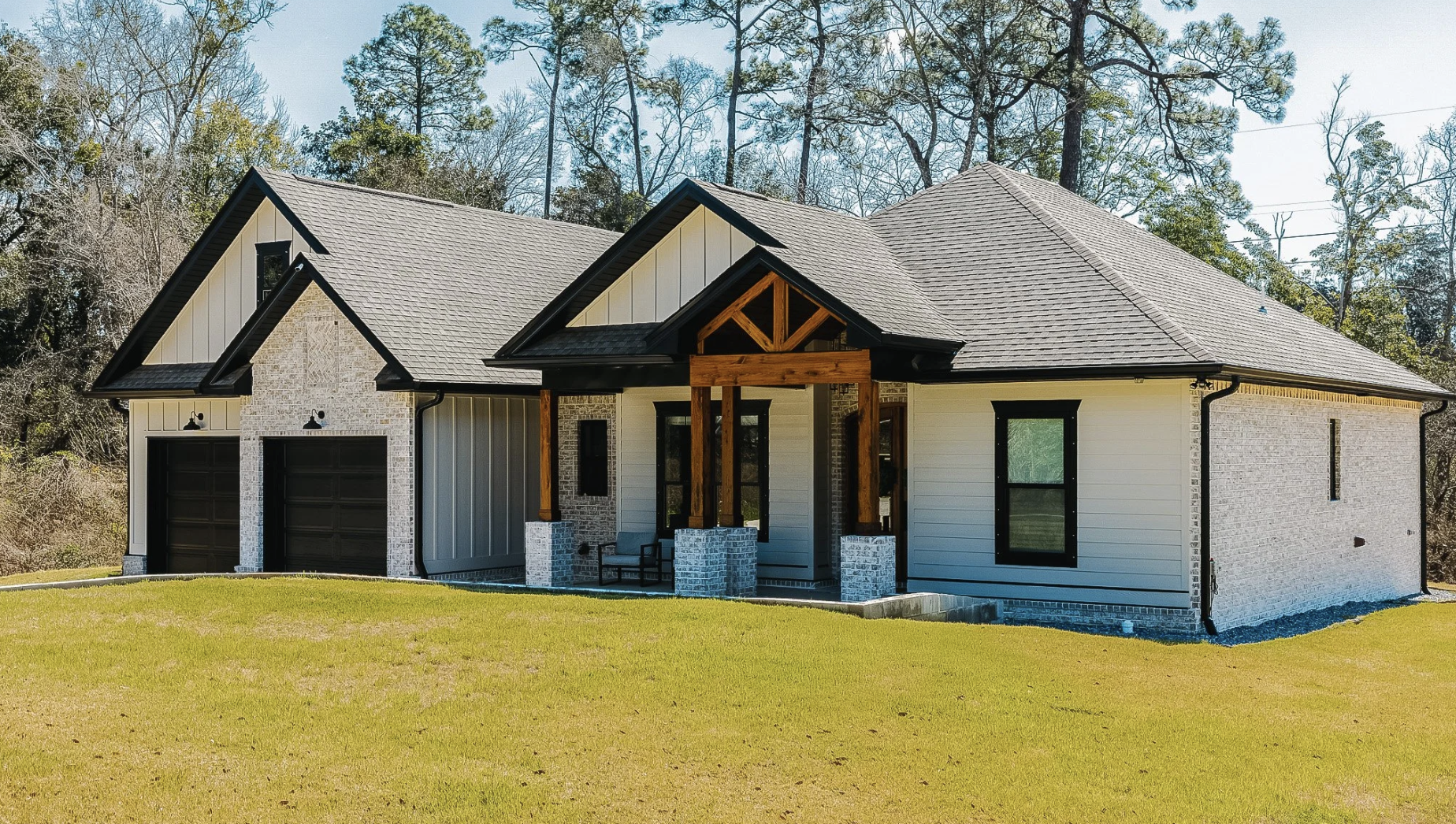
You walk outside. Look up at your roof.
Nothing jumps out.
No shingles missing. No obvious damage. No leaks that you know of.
So in your mind, everything’s probably good.
And honestly, that’s a completely normal way to think about it.
But here’s the reality we see all the time across Pensacola, Gulf Breeze, Milton, Pace, Perdido, and the surrounding areas…
A lot of roofs that look perfectly fine from the ground are already starting to have problems.
You just can’t see them yet.
The Problem With Looking From the Ground
Most homeowners only ever see their roof from one angle.
Standing in the yard. Maybe from the driveway. Maybe from across the street.
And from that distance, almost every roof looks okay.
The thing is, roofing problems don’t usually show themselves in big, obvious ways right away. They don’t announce themselves.
They start in small spots. In places that aren’t easy to see unless you’re actually up there looking closely.
Edges. Valleys. Around vents. Around flashing. Underneath shingles.
So from the ground, everything looks normal. Nothing feels urgent.
But up close, it’s a different story more often than you’d think.
Shingles Can Be Compromised Without Falling Off
A lot of people assume if the shingles are still there, then they’re still doing their job.
And sometimes that’s true.
But not always.
Here in Pensacola, wind doesn’t always rip shingles off right away. A lot of times, it just weakens them.
It breaks the seal that holds them down. It loosens them just enough that they’re not fully secured anymore.
You won’t see that from below.
They’re still laying flat. Still look normal.
But now they’re vulnerable.
So when the next storm rolls through—and it always does—that’s when those same shingles start lifting, letting water in, and causing damage underneath.
It’s not the first storm that gets you.
It’s what that first storm quietly set up for the next one.
Flashing Is Where Most Problems Actually Start
If there’s one place we consistently find issues, it’s not the middle of the roof.
It’s the details.
Flashing is what seals off the most vulnerable parts of your roof. Around vents, chimneys, skylights, roof transitions.
Basically anywhere the roof isn’t just one clean, flat surface.
And over time, those areas take a beating.
The sun dries out sealants. Humidity keeps moisture sitting longer than it should. Salt air near the coast slowly breaks down metal components.
So what happens?
Things start to separate just a little.
A small gap forms. A seal cracks. A piece of flashing lifts slightly.
Nothing dramatic. Nothing you’d notice from the yard.
But when heavy rain hits—or when wind pushes water sideways during a storm—that’s all it takes.
Water finds that spot every time.
Heat and Humidity Are Constantly Working Against You
This is one of the biggest differences with living on the Gulf Coast.
Your roof doesn’t just deal with storms.
It deals with stress every single day.
The sun beats down on it for hours. Temperatures climb. Materials expand and contract over and over again.
At the same time, humidity keeps everything from fully drying out.
So you’ve got this constant cycle:
Heat breaking materials down. Moisture hanging around longer than it should.
And everything slowly wearing out from both directions.
It’s not dramatic. It’s not sudden.
But it’s consistent.
And over time, that’s what shortens the life of a roof in places like Pensacola, Milton, and Gulf Breeze compared to other parts of the country.
Leaks Don’t Always Show Up Where They Start
This is where things get tricky for homeowners.
Because even when a leak exists, it doesn’t always show up in an obvious way.
Water rarely just drips straight down from where it enters.
It moves.
It can run along roof decking. Follow beams. Soak into insulation. Travel several feet before it ever shows up inside your home.
So when you finally notice a stain on your ceiling, that might not even be where the problem is.
And by that point, it’s usually been going on for a while.
Sometimes longer than people expect.
Storm Damage Isn’t Always Obvious Right Away
After a storm, most people do a quick visual check.
No shingles in the yard? Good.
Nothing hanging off the roof? Probably fine.
But a lot of storm damage doesn’t look like that.
Wind can slightly lift shingles without removing them. It can weaken seals, shift flashing, or create small openings that aren’t visible unless you’re right on top of them.
So everything looks okay.
Until the next heavy rain.
Or the next storm.
That’s when those small issues turn into real problems.
Age Can Be Misleading
One of the more surprising things for homeowners is how a roof can look decent and still be near the end of its life.
Shingles might still be in place.
The color might not look that bad.
Nothing obvious seems wrong.
But underneath, the material has lost strength.
After years of heat, humidity, and storms, it just doesn’t perform the same way anymore.
So even though it “looks fine,” it doesn’t have much margin left when conditions get rough.
And that’s usually when failures happen.
This Is Why Inspections Actually Matter
Most serious roofing problems don’t start big.
They start small, quiet, and easy to miss.
That’s why inspections matter more than people think.
Not just a quick glance from the ground.
But a real look at what’s going on up there.
Checking things like:
• Shingle condition and seal integrity
• Flashing and transition points
• Early signs of moisture intrusion
• Areas that take the most wind stress
• Spots that could fail in the next storm
It’s not about finding something wrong.
It’s about knowing where things actually stand.
Just Because It Looks Fine Doesn’t Mean It Is
That’s really the takeaway here.
A roof can look completely normal from the outside…
And still have issues developing underneath.
Especially in a place like Pensacola, where weather conditions don’t give roofing systems much of a break.
So if it’s been a while since your roof has been looked at, or if it’s been through a few storm seasons without a check…
It’s worth taking a closer look.
Not because something is definitely wrong.
But because if something is starting, it’s a lot easier to deal with now than later.
Protect Your Home Before Problems Show Up
We see this all the time.
Roofs that looked fine.
Until they weren’t.
At MISTI Roofing, we focus on the areas most homeowners never see and catch issues early, before they turn into bigger repairs.
Contact us today for a free roof inspection and quote if you want to know what’s really going on with your roof.